The live risk engine for derivatives
One engine for pre-trade XVA impact, SA-CVA and BA-CVA capital, counterparty exposure and market risk, fast enough that every quote carries its XVA and capital, what-if runs intraday and full sensitivities are routine.
How it works
Pricing, capital, exposure and market risk run on one engine with one set of models and market data. The desk, the capital team and risk work from the same numbers, computed when they ask, not the night before.
In
Norma Core
Out
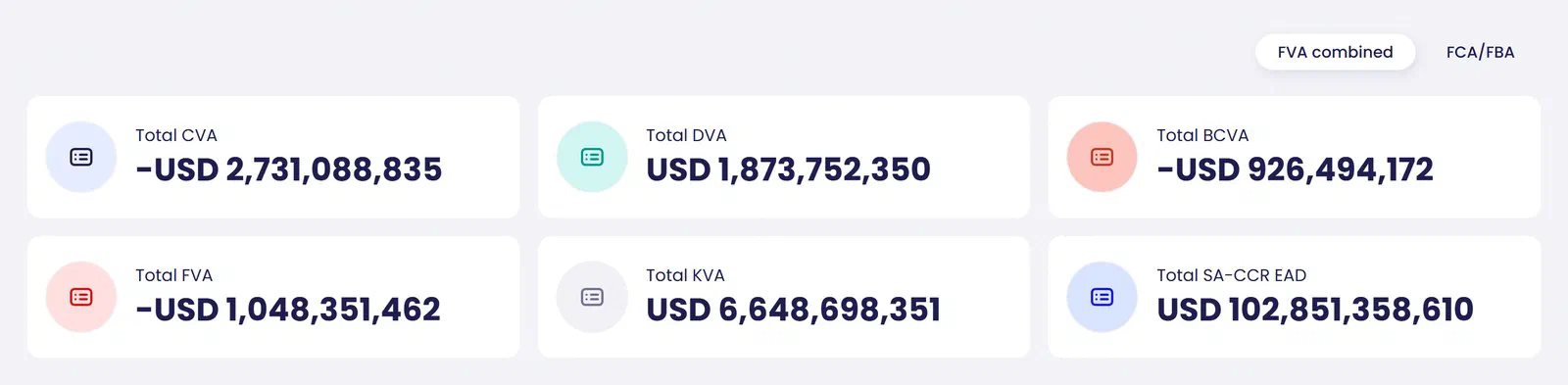
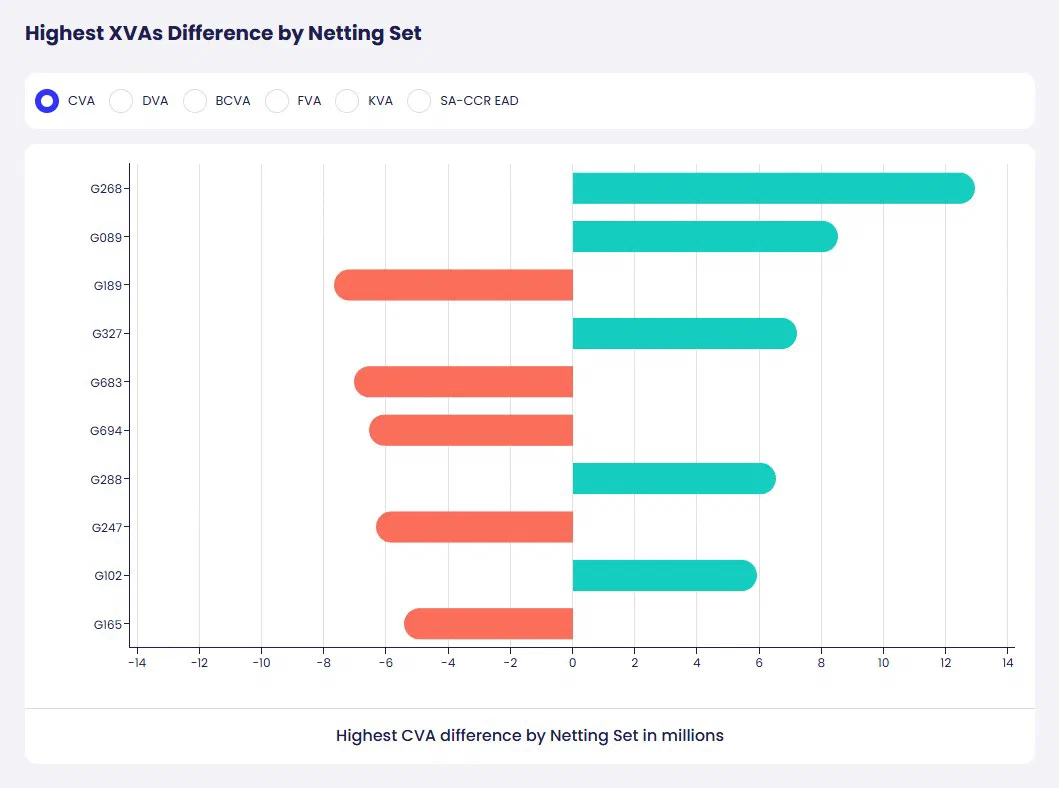
A full XVA run on a million-trade book in a typical configuration: CVA, DVA, BCVA, FVA, KVA and SA-CCR exposure, totals and by netting set, and the full set of sensitivities, a million first-order and hundreds of thousands of second-order, by netting set, currency and market quote, from the same run, rerun whenever the book or the market moves.
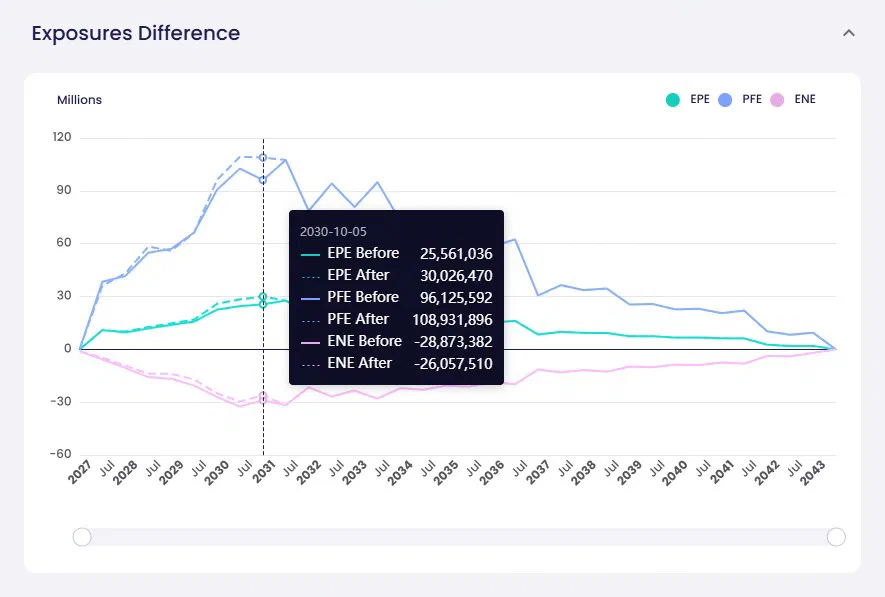
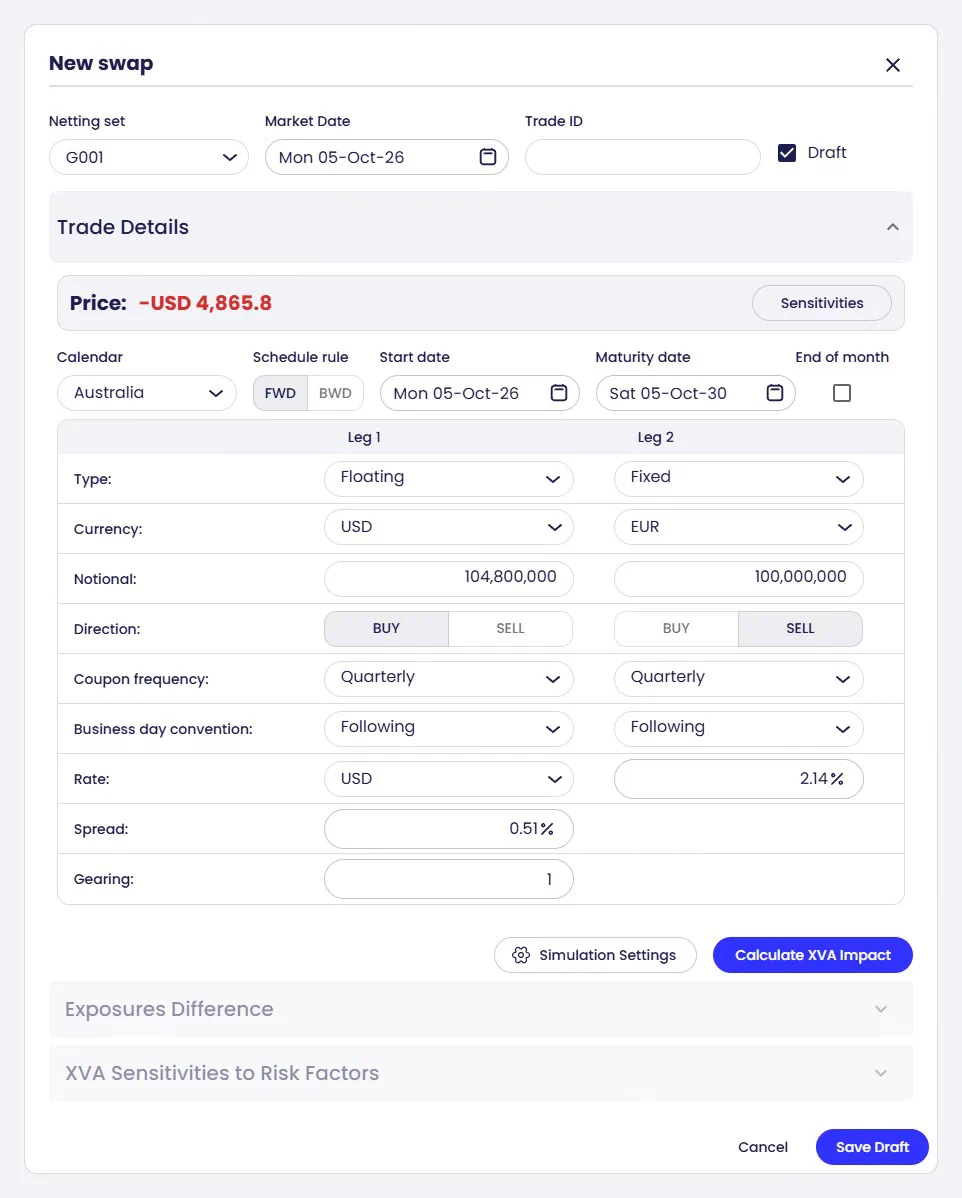
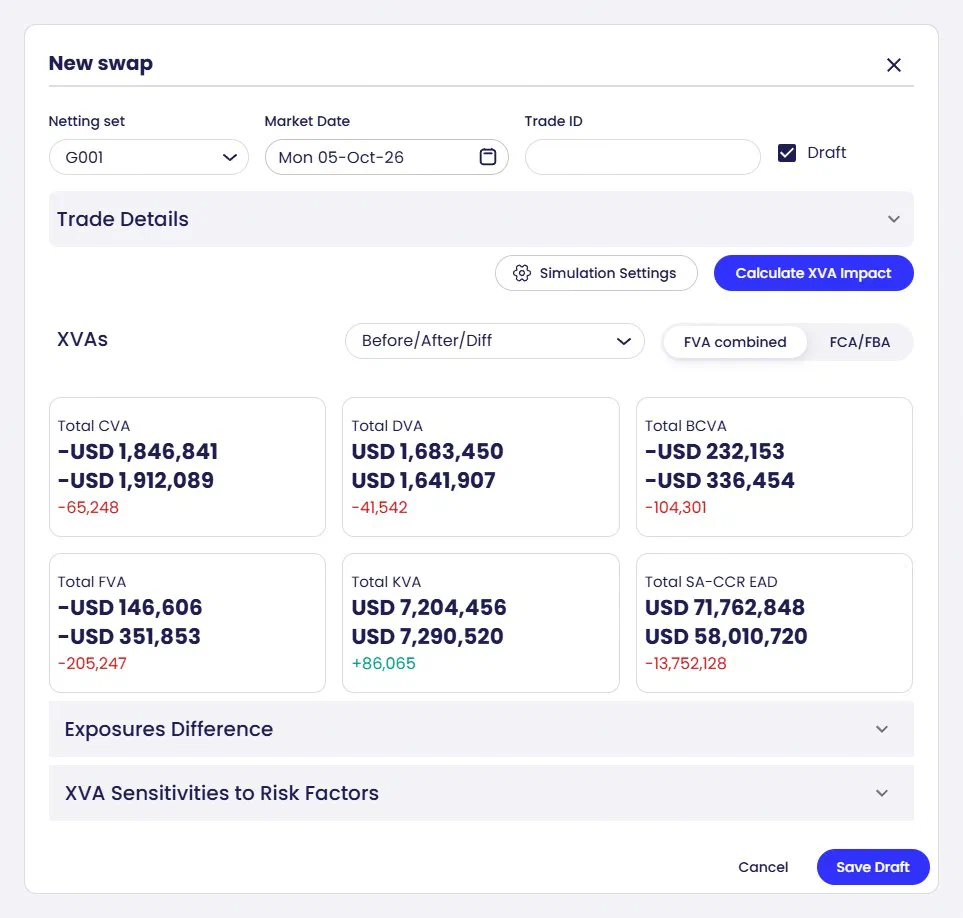
A new swap priced against the client's netting set: every XVA and the SA-CCR exposure before and after, and the change in exposure over the life of the trade.
Exclude, add or modify trades, change market data or collateral terms, and compare the book before and after: run statistics side by side and the difference in every total.
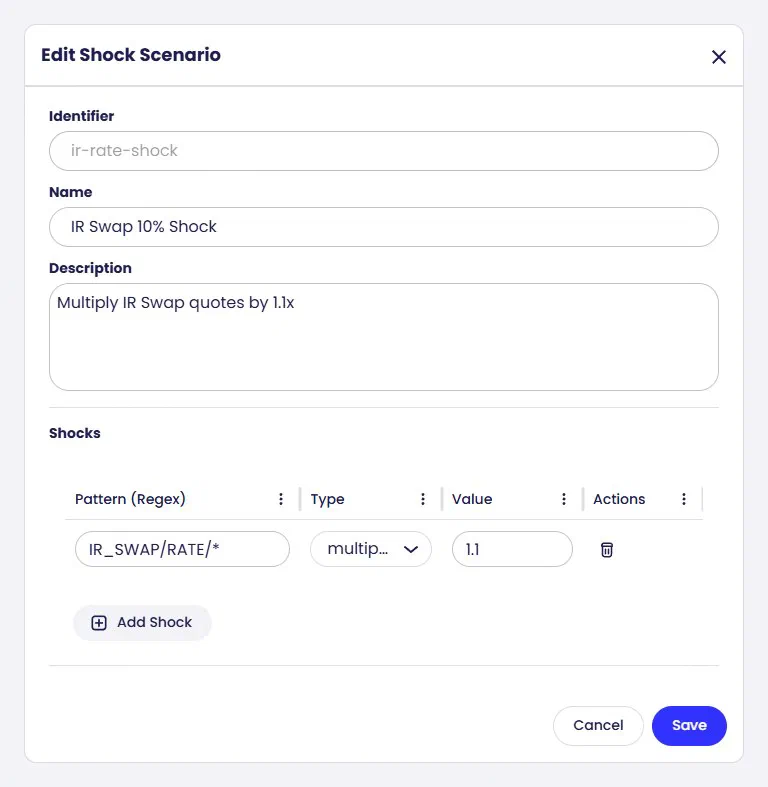
Pattern-based shocks on quotes and curves, saved and reused, applied to pricing, exposure, capital or market risk.
Start with the module your regulator or your desk needs this year. Add the next on the same contract and the same data.
Pre-trade XVA impact and capital-aware quotes
Incremental CVA, DVA, FVA, MVA, ColVA and KVA of a new trade with Greeks, including vega, gamma and cross-gamma, in under a second, on option flow as well as linear. Initial margin under ISDA SIMM per netting set. Live portfolio what-if, and XVA P&L explain: day-on-day changes in CVA, DVA, FVA, MVA and KVA attributed to market moves, time, trades and credit. Through Norma's analytics dashboards, or into your own dashboards and reporting tools via the API.
DemoSA-CVA, BA-CVA, SA-CCR and KVA
Sensitivities to every supervisory risk factor, hedge recognition, SA-CVA and BA-CVA side by side, SA-CCR exposure and capital with collateral and initial margin recognised. Know which approach is cheaper for your book before you choose.
The Capital StudyPFE, limits, what-if and stress
Pre-trade credit checks, counterparty exposure profiles with and without initial margin, limit usage recomputed live, what-if and stress on demand, so counterparty risk runs at the pace of the market rather than the overnight batch.
DemoVaR, drilldown and attribution, live
Full-portfolio VaR and expected shortfall re-aggregated in real time on tens of millions of transactions, drilldown on any desk, dimension or filter, FRTB standardised-approach capital from the sensitivities, internal-model aggregation and attribution tests on the same run, on the P&L vectors your engine produces. No overnight batch.
BenchmarksPre-trade XVA impact with capital in the quote, SA-CVA and BA-CVA side by side, exposure and market risk on one engine.
Start hereYour own XVA number to check bank quotes against, on uncleared hedging books.
Start hereCVA and DVA for IFRS 13 fair value and hedge accounting, and a check on what the banks charge.
Start hereCounterparty exposure and XVA on physical and financial books, where credit terms drive the cost of hedging.
Start hereNorma comes from almost two decades of building pricing and risk engines for the largest banks. Every time, the models were fine and the engines were built for an overnight window the business had outgrown. Norma is an engine built without that window.
Why Norma existsSee it on your own trades. A demo takes an hour.
Request a demo